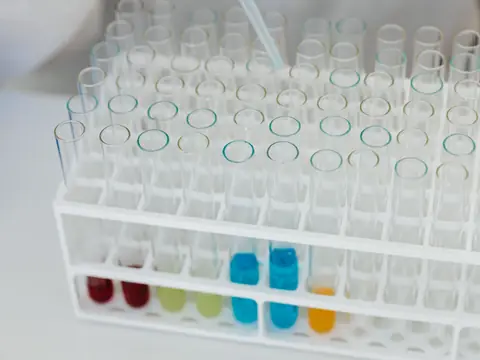
Every good water treatment decision starts with knowing what is in the water. In Tampa that means two different things depending on where your water comes from: on city water, the city’s report plus a test at your own tap; on a private well, a lab test, because no utility tests the well for you. This page explains what to test, who can test it and what to do with the results.
Water Filtration Tampa is an independent referral service, not an installer, plumber or laboratory. When you send the form, your details are passed to an independent local water treatment pro, who can contact you and prepare a quote.
On City of Tampa water: the report first
The City of Tampa Water Department publishes a yearly water quality report. Its 2025 report gives the main source (the Hillsborough River), the disinfectant (chloramine, formed with chlorine and then ammonia), the average total hardness (211 mg/L, or 12.3 grains per gallon) and the average pH (7.88), along with the results for regulated contaminants. Read it first: it tells you what the city measured before the water reached your meter. The guide to Tampa water quality explains it.
A test at your own tap adds what the report cannot: what the water is like after it has passed through your pipes and fixtures. Ask a pro to test at the tap before quoting for a water softener in Tampa or a filter, so the system is set for your water rather than an average.

What to test for, by what you notice
| What you notice | Ask to test for | Why |
|---|---|---|
| Spots, scum, scale | Hardness | To size and set a softener |
| Chlorine-like taste or smell | Chlorine or chloramine | To choose a filter certified for it |
| Rusty color or orange stains | Iron | EPA secondary guideline 0.3 mg/L |
| Black or brown stains | Manganese | EPA secondary guideline 0.05 mg/L |
| Salty taste | Chloride and total dissolved solids | EPA guidelines 250 and 500 mg/L |
| Concern about lead | Lead | To choose a filter certified under NSF/ANSI 53, or RO |
The EPA’s secondary standards are non-mandatory guidelines for taste, color and staining, and the EPA does not enforce them. They are still a useful yardstick when you compare a test result for iron, manganese, chloride or dissolved solids with the guideline.
On a private well: test every year
The Florida Department of Health says about 12% of Florida residents rely on limited-use systems and private wells, and that private well owners are responsible for ensuring their own well water is safe to drink. The EPA says private wells are not regulated by the federal government under the Safe Drinking Water Act.
- Test every year for total coliform bacteria, nitrates, total dissolved solids and pH (EPA and CDC)
- Test right away if there are known problems with wells in the area
- Test after flooding, land disturbance, new construction or new industry nearby
- Test after any part of the well is replaced or repaired
- Test if the water’s taste, color or smell changes (CDC)
Use a laboratory certified to do drinking water testing; the CDC says to use a state-certified laboratory. The EPA notes that your local health department may provide private well testing for free, so it is worth asking before you pay for a lab. The Florida Department of Health names poorly maintained septic systems, livestock areas, fertilizer and poorly built wells as ways bacteria and nitrate reach wells.

After the results
Treatment is chosen from the results, not the other way round. Hardness points to a softener; taste and odor point to a filter certified for the cause; a specific contaminant points to a unit certified to reduce it. If a well result shows bacteria or high nitrates, talk to your health department and a qualified pro about what to do before treating it yourself. The water treatment in Tampa page sets out the options.
Asking for a water test in Tampa
Send the form, choose what you need or pick not sure yet, and add your ZIP code. Say whether you are on city water, another provider or a well. Your request goes to the operator of this site, who passes it to an independent Tampa water treatment pro, who can contact you about testing and prepare a quote for any system you want. Asking is free and you never have to hire anyone.
Not sure what is in your water? Ask a local pro.
Questions people ask
How often should a private well be tested?
The EPA and the CDC advise every year for total coliform bacteria, nitrates, total dissolved solids and pH, and again after repairs, flooding or changes nearby.
Where can I get well water tested?
At a laboratory certified for drinking water testing. The EPA notes your local health department may provide private well testing for free.
Do I need to test city water?
Read the city’s yearly report first. A test at your own tap helps when you are choosing and sizing a system.
